
This spring, Anderson University will send 89 students and faculty leaders across the globe through its Tri-S program, continuing a tradition of faith-centered service, intercultural learning and global engagement that has shaped the institution for more than six decades.
Tri-S — short for Serve, Study and Share — began in 1964 as an effort to extend classroom learning beyond campus boundaries. Since then, more than 11,000 students, faculty and staff have participated in domestic and international experiences designed to cultivate global awareness, professional development and spiritual growth.
Today, Tri-S remains one of the university’s signature programs, offering students opportunities to serve communities, apply academic skills in real-world settings and experience cultures far different from their own.
“We intend to graduate persons with a global perspective who are competent, caring, creative, generous persons of character,” said Stefanie Leiter, chair of the Department of Humanities and coordinator of Tri-S and study away. “Serving, studying and sharing our world outside the classroom provides these perspectives.”
Leiter said the program’s impact often extends well beyond the trip itself.
“Some of my most profound encounters with Jesus have come through experiencing the world around me,” she said. “AU creates opportunities for students to try new things, discover fresh ways to share their faith and serve others.”
Costa Rica: Engineering students design solutions that serve real needs
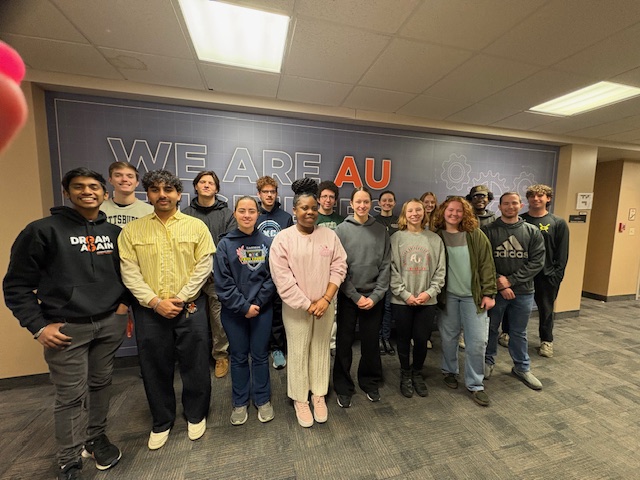
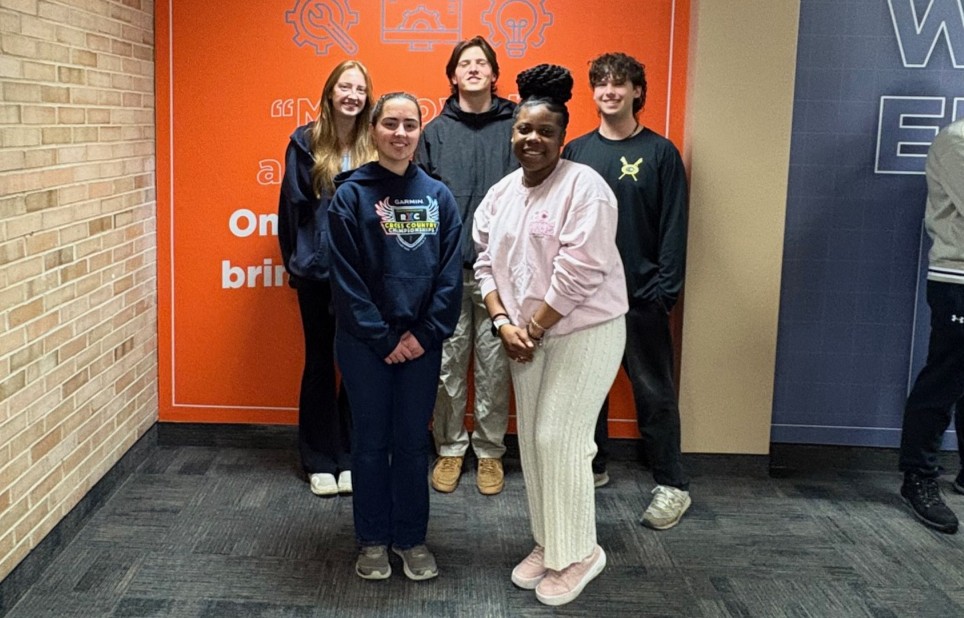
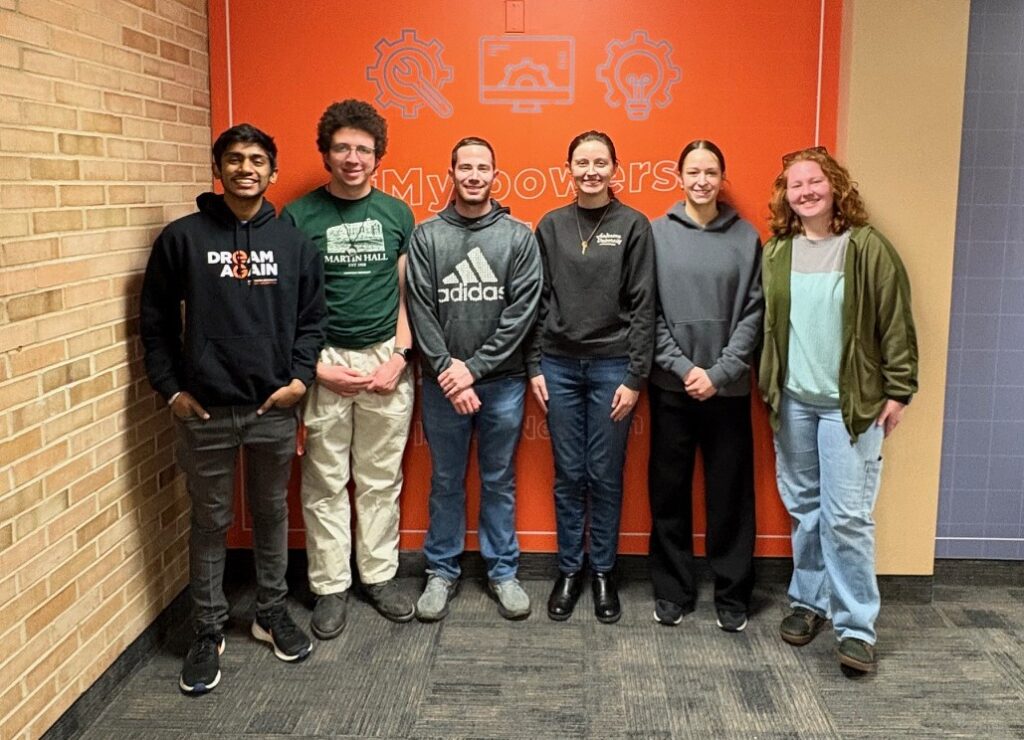
Among this year’s trips, one of the most hands-on and technically focused will take place in San José, Costa Rica, where engineering students will partner with local churches to address infrastructure challenges affecting everyday ministry and community life.
Led by Brian W. McKenna, assistant professor of civil and mechanical engineering, the trip is part of a required course in Anderson’s humanitarian engineering program titled Engineering Design for Service.
Rather than performing construction themselves, students will conduct site analyses and develop professional engineering plans that local partners can implement long after the team returns home.
“The purpose of the trip is to give students an opportunity to use their engineering skills to design something that serves,” McKenna said.
Students will work with the Church of God’s Global Strategy office, whose regional headquarters for Central and South America is located in San José. The partnership allows students to collaborate directly with leaders who oversee hundreds of congregations across the region.
Three design teams will address separate challenges:
One team will survey a church property experiencing chronic flooding and drainage problems that affect both parking areas and interior spaces. Using professional surveying equipment, students will produce a comprehensive site analysis and recommendations for improved water management.
A second team will explore passive cooling strategies for buildings where air conditioning is impractical due to cost and unreliable electricity. Possible solutions include improved ventilation, shade structures, reflective roofing materials and architectural modifications.
A third team will develop a solar power feasibility tool — essentially a decision-making model that allows churches to evaluate whether solar energy installations would be cost-effective based on roof orientation, surface area and current energy expenses.
“The goal is not to replace local labor or impose outside solutions”, McKenna said, “but to equip community partners with information and designs they can implement themselves”.
“This teaches students to work with real clients and real constraints,” he said. “It’s not solving textbook problems. It’s understanding context.”
McKenna hopes the experience will help students integrate professional ambition with a commitment to service.
“I want students to understand how to merge a life of faith and service with their career,” he said. “Serving through their careers is their highest goal.”
Ireland: Nursing students encounter global health realities
Another team will travel to Ireland, where nursing students led by Kari E. Bryan, chief academic officer and chair, School of Nursing, and Amanda Boys, assistant professor, School of Nursing and Kinesiology will partner with Tiglin, a Christian organization serving individuals experiencing addiction, homelessness and social marginalization.
Students will conduct health screenings, provide education sessions on topics such as sleep, nutrition and chronic disease management, and observe residential rehabilitation programs.
“We want them to see nursing not only as a clinical profession, but as a calling that requires empathy and adaptability,” said Boys.
The experience also exposes students to differences in health care systems and social services outside the United States, deepening their understanding of how cultural and economic factors influence patient outcomes.
As part of the partnership, the team is organizing a donation drive to support Tiglin’s homeless outreach programs. Needed items include hats, scarves, gloves, tents and sleeping bags. Donations will be accepted through April 2 in the nursing office on the third floor of Hartung Hall.
Honduras: Social work seniors apply four years of training
Two teams will serve in Honduras, including the Social Work Program’s annual senior capstone trip — a tradition spanning more than 30 years.
Lolly Bargerstock, director of the social work program, professor of social work and director of assessment, Department of Social Sciences said, “The experience represents the culmination of students’ academic preparation before graduation.
“The senior trip is the culmination of students’ knowledge and skill-building over four years, put into practice and service outside of the AU community,” she said.
This year’s graduating class consists entirely of Spanish speakers, allowing students to communicate directly with community members without translators.
Students will partner with Heart to Honduras, a faith-based organization working in rural communities near Lake Yojoa using asset-based community development — an approach focused on strengthening existing local resources rather than imposing external solutions.
“The trip will provide an immersive experience for seniors to practice their Spanish-speaking skills, as well as observe and participate in community development practices,” Bargerstock said.
Students will engage local leaders in sustainable initiatives, interact with church congregations and offer educational workshops tailored to community needs.
Bargerstock said, “The experience also fosters strong relationships among graduating seniors and faculty as they conclude their time at Anderson together”.
In addition to service work, the trip includes cultural excursions such as visiting national parks, zip-lining and exploring local markets.
A second Honduras trip led by Nathan Manley will focus on additional service projects and ministry activities in the region.
Belize: Volleyball team serves through sport
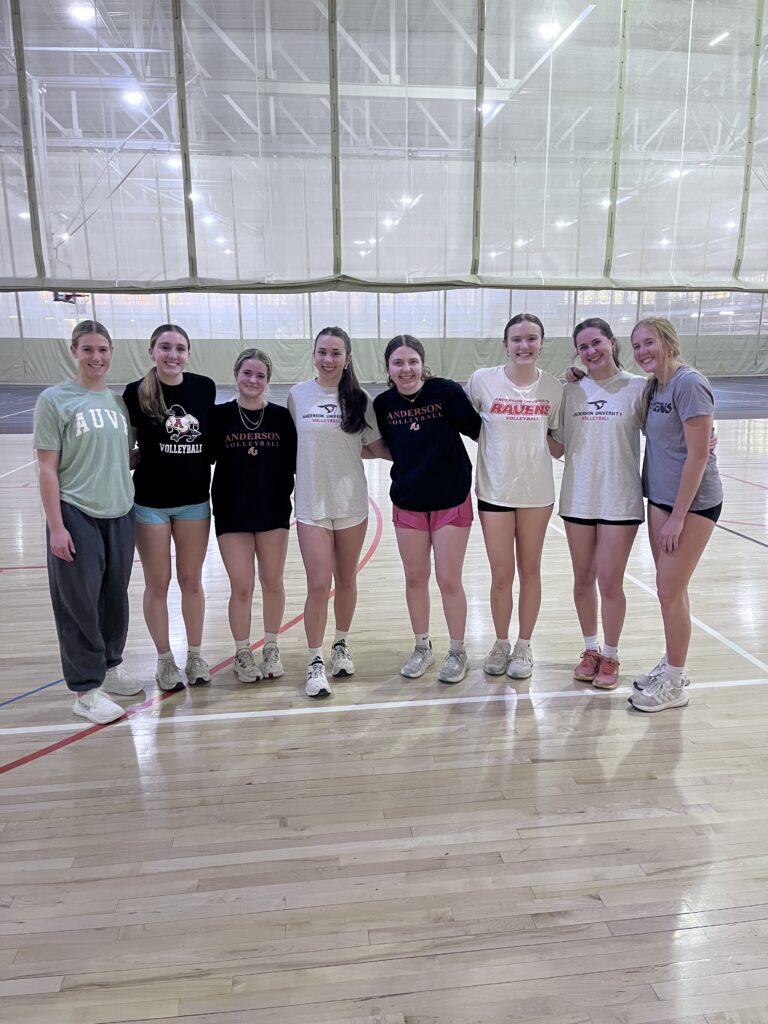
Anderson’s women’s volleyball team will travel to Belize under Tami Miller, head coach of Anderson University’s women’s volleyball team. Unlike typical athletic travel, the team will not compete against other schools.
Instead, players will lead youth volleyball camps and participate in service projects with local schools, churches and ministries.
“It’s mission-based,” Miller said. “We don’t go to compete. We go to serve.”
About half of the roster — eight players — will participate, with students raising funds to cover travel expenses. NCAA regulations allow teams to take international trips only once every three years.
Miller said she has led service-oriented trips for more than two decades and views them as opportunities for ministry rather than athletic performance.
Volleyball clinics will likely serve elementary through high school students, though exact details will depend on local arrangements.
The team may also assist with construction projects or other community needs during the trip.
Japan, Egypt, London and Paris: Cultural immersion and ministry
Other Tri-S teams will focus on cultural exploration, academic learning and ministry in diverse global contexts.
Honors students led by Dr. Laura Stull, associate professor of psychology, will travel to Japan to study culture, history and contemporary society in a country that presents a markedly different worldview from the United States.
A service team led by Ali Kardatzke, director of first-year success will travel to Egypt for ministry and outreach work.
Students in global communications will travel to London and Paris, two major international media centers, where they will study communication practices in a global context while experiencing European culture firsthand.
These trips emphasize observation, reflection and cultural engagement as tools for developing global awareness.
Botswana and domestic service opportunities
A group from the university’s PACT program will serve in Botswana, led by Dr. Jason Varner, professor in the School of Theology and Christian Ministry. The destination was originally planned as Rwanda but later shifted.
Tri-S experiences are not limited to international travel. A local nursing team led by April Lopez will serve within the United States, demonstrating that meaningful service opportunities exist both globally and domestically.
A shared mission beyond campus
Before departure, all Tri-S participants gather for a campuswide commissioning service that includes prayer and encouragement from the Anderson community.
Brian “B.” Martin, dean of the Center for Spiritual and Intercultural Life, said bringing all teams together emphasizes unity and purpose.
“Praying collectively reminds participants that they represent not only themselves but the university’s mission of faith and service”, he said.
Transformative experiences across generations
Leiter said Tri-S has been transformational for students since its founding and remains central to Anderson’s identity as a Christian university committed to preparing graduates for service in the church and society.
“As a student, it was transformational,” she said. “I’m excited for today’s students to discover the same transformative experiences that generations of Ravens have cherished.”
As the 2026 teams prepare to depart, they carry forward a tradition rooted in the belief that education reaches its fullest expression when knowledge, compassion and faith are lived out in the wider world.