
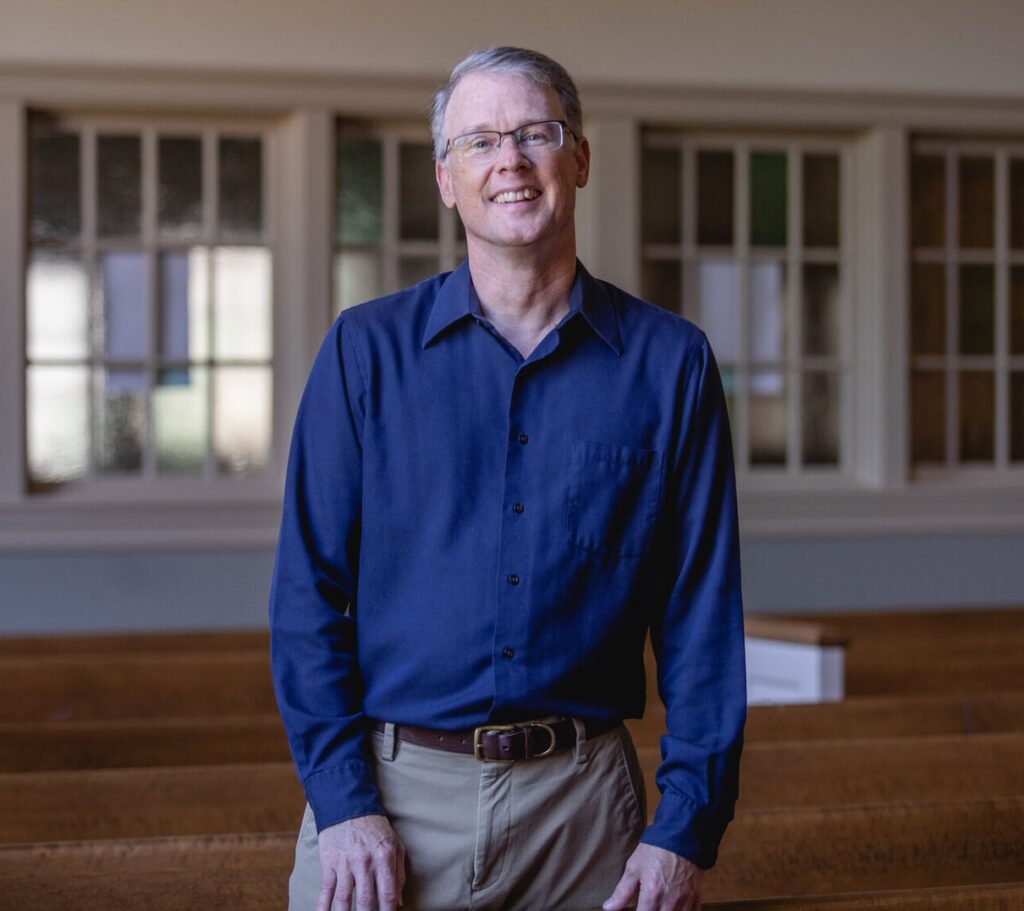
For Pastor Jonathan Grubbs of Park Place Church of God, internships are more than educational experiences. They are the starting point for a lifetime of service.
“I hope the internships we provide help foster people serving in the kingdom for a lifetime,” Grubbs said. “An internship is like a seed or a start. The better you can start, the stronger the future becomes.”
Through the NetVUE Leadership for Communities of Faith grant at Anderson University, students are gaining paid internship opportunities at local congregations, including Park Place Church of God. The program connects classroom learning with hands-on ministry experience while helping students discern their vocational calling.
A Tradition of Supporting Students
Grubbs said the church’s commitment to mentoring students reflects a long-standing relationship between the Church of God and Anderson University.
“We’ve always been invested in the learning and growth of Anderson University students,” he said. “Supporting internships simply continues that tradition.”
Church leaders see internships as an extension of the university’s mission to prepare students for lives of service in both church and community settings.
“Students learn ideas and concepts in the classroom, but internships allow them to put those ideas into practice,” Grubbs said. “That real-world experience is what helps them grow.”
Discernment Through Experience
One of the most significant benefits of internships, Grubbs said, is that they help students discern their calling through hands-on learning.
“Discernment happens when students try new things,” he said. “Sometimes they discover they are called to one area, and other times they realize their gifts are better suited somewhere else.”
He described the process as one of exploration and reflection.
“The Quaker tradition says, ‘way will open or way will close,’ and both outcomes are part of learning,” Grubbs said. “Even when something doesn’t work, that experience helps students understand their direction.”
Internships provide a safe environment where students can test their skills and build confidence before entering full-time ministry or professional roles.
“It’s better to learn those lessons now as a student than later in your career,” he said.
Building Confidence Through Leadership
Grubbs said one of the most noticeable changes in student interns is increased confidence, particularly when they are given opportunities to lead.
“We try to provide opportunities for students to teach lessons, lead worship or participate in ministry activities,” he said. “Many students have never had the chance to stand in front of a group outside of their peers.”
Those opportunities help students develop leadership skills that prepare them for future responsibilities.
“When students step into leadership roles, they begin to realize they can do it,” Grubbs said. “Later, when they are asked to lead in another church or organization, they can draw on that experience and say, ‘I’ve done this before.’”
Real Experience Builds Skills
Grubbs pointed to recent experiences with student interns as examples of how hands-on leadership builds confidence.
“One of our interns led communion for the first time during a Sunday service,” he said. “She worked closely with a mentor to prepare, and she did a great job. The congregation responded very positively.”
Experiences like that allow students to develop skills in a supportive environment where guidance and feedback are readily available.
“We give students opportunities to lead, and if something doesn’t go perfectly, we’re there to support them and help them improve,” Grubbs said. “That process builds confidence and helps them grow.”
Finding the Right Fit
Grubbs emphasized that successful internships begin with understanding each student’s interests and goals.
“We start by asking where the student wants to learn and grow,” he said. “Our goal is not simply to fill a position, but to create an environment where students can develop their strengths.”
In some cases, that means connecting students with other churches or organizations that better match their career interests.
“Our church may not always be the best place for every student,” Grubbs said. “If another ministry in the community can provide a better opportunity, we want to help students find that place.”
The Role of Funding and Support
Programs like the NetVUE grant play a critical role in making internships possible, especially for nonprofit organizations.
“Churches and nonprofits often don’t have the same resources that businesses have,” Grubbs said. “When a grant provides support, it allows us to offer opportunities that might not otherwise exist.”
He said funding support helps churches invest in students while continuing to serve their communities.
“When resources are available, organizations can focus not only on serving people but also on mentoring the next generation of leaders,” he said.
Looking Toward the Future
Grubbs said the long-term impact of internships goes beyond a single semester or academic year.
“We hope to be as available as we can,” he said. “If we can help students start well, we’ve done something meaningful — not only for them, but for the communities they will serve.”
For Grubbs, the goal is simple: prepare students to serve with confidence and purpose wherever their future leads.
“If students leave here more confident, more prepared and more committed to serving others,” he said, “then the internship has done its job.”