

AU is now hosting Freedom House Church on campus through a partnership leaders say advances the university’s mission of faith, learning and service while expanding opportunities for students and strengthening ties with the Anderson community.
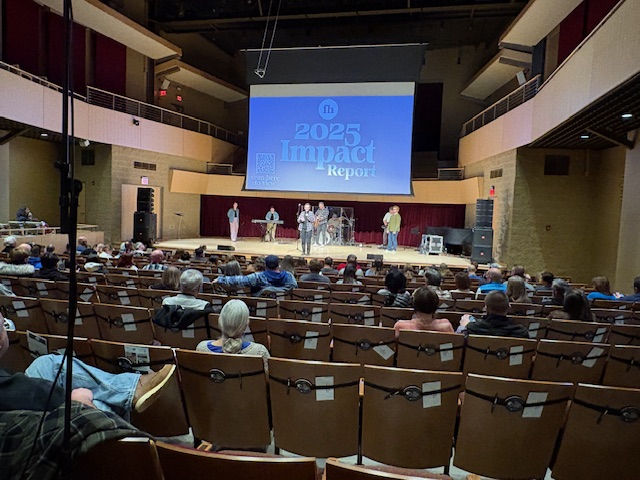
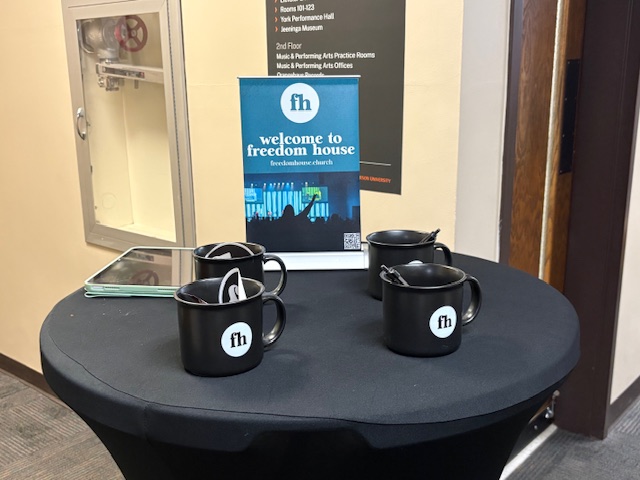
Freedom House, a Church of God congregation, relocated to AU after selling its previous facility and losing a planned lease at another location. The church now operates offices in Morrison House and holds Sunday worship gatherings in York Performance Hall.
President Scott Moats said the collaboration reflects both practical stewardship and the university’s faith-based identity.
“When we saw one of our local established churches in need of finding a place, it was a hand-in-glove fit for us,” Moats said. “They had a need, we had a facility and both entities would win.”
Moats explained that the partnership aligns with AU’s strategic vision, including its “Faithful Campus Framework,” which emphasizes mission-driven collaboration.
“Our mission is to educate for a life of faith and service,” he said. “If this institution cannot demonstrate how to serve, then we have no business teaching how to serve. This partnership shows that Anderson University is here for the community.”
Removing barriers to worship for students
University leaders say having a church on campus addresses a long-standing challenge for students without reliable transportation. With Park Place Church of God located across University Boulevard and Freedom House now within walking distance, students have multiple options nearby.
“This gives students more options,” Moats said. “Location is no longer a barrier. You can walk across the street and be in worship.”
He added that exposure to different congregations and worship styles can enrich students’ spiritual development and encourage meaningful intergenerational relationships.
“It’s valuable for our students to interact with people who have lived lives of faith for decades,” Moats said. “That kind of mentoring doesn’t happen as easily when students are isolated on campus.”
Moats emphasized that AU is not attempting to replace existing churches but to connect students with them.
“We’re not a church,” he said. “Our role is to provide opportunities. Having strong congregations close to campus helps meet the diverse needs of our student population.”
A focus on the next generation
Freedom House leaders say the move to campus creates a unique opportunity to invest directly in college students and emerging leaders.
Kelsey Branderhorst, chief of staff and pastor at Freedom House, said developing the next generation is central to the church’s mission.
“One of our biggest focuses is building up the next generation,” Branderhorst said. “We care deeply about students and young leaders, and being on campus gives us an incredible opportunity to walk alongside them.”
The church has already begun working with AU students through internships and plans to launch a three-year ministry residency program in partnership with Trellis. The program is designed for students pursuing church leadership and provides both financial assistance and hands-on experience.
“It’s for people who feel confident that ministry is where they’re headed,” Branderhorst said. “They get real-world experience while continuing their education, and we get to invest in them long-term.”
She said the church also hopes to provide a safe environment where students can explore leadership, faith and service.
“We want students who are going into ministry to have a place to try things, to learn, and honestly to fail and get back up again,” she said. “Not every church creates space for that, but we believe growth happens through experience.”
A place to belong — for all students
Branderhorst emphasized that Freedom House aims to welcome students at all stages of faith, not just theology majors or committed churchgoers.
“We think everybody has a place to serve,” she said. “No matter how far along you are in your faith journey, there are ways to use your gifts and love people.”
Church leaders plan to connect with students through informal interactions and structured programs—from mentoring relationships to simple acts of support during stressful academic periods.
“We want to meet students right where they are,” Branderhorst said. “Maybe that looks like coffee at a local shop, helping during finals week or just being a place they can walk to and breathe for a moment.”
She said proximity matters for students who may feel overwhelmed or isolated.
“When something is within walking distance and in a place you already feel comfortable, it becomes easier to take that first step,” she said.
Reconnecting with the surrounding community
Relocating to AU also brings Freedom House closer to neighborhoods and community organizations, strengthening its outreach.
Previously located on the south side of Anderson, the church had limited interaction with nearby residents. Its new location near campus provides opportunities for collaboration with local ministries, nonprofits and churches.
“We were so far outside the community that it was hard to make roots,” Branderhorst said. “Now we’re literally around people. People can stop by, ask for help or get connected to resources.”
Freedom House plans to partner with organizations addressing food insecurity, family crises and foster care needs — issues that disproportionately affect Madison County.
“We don’t want to just put a Band-Aid on problems,” she said. “We want to address root causes and make a long-term impact on families.”
Cooperation, not competition
Both AU and Freedom House leaders stressed that the church’s presence is not intended to compete with Park Place Church of God or other local congregations.
Instead, they hope the arrangement will broaden spiritual support for students and encourage unity among churches.
“Not everybody’s home looks the same,” Branderhorst said. “We want people to find a place where they feel they belong, whether that’s with us or somewhere else.”
Moats agreed that different congregations naturally reach different people.
“Freedom House will reach people that Park Place won’t, and Park Place will reach people that Freedom House won’t,” he said. “Together, they meet a greater need.”
Stewardship of campus facilities
University officials also view the partnership as a responsible use of campus resources. Morrison House had been underutilized after health services moved to a virtual model.
“A building that sits empty is a liability,” Moats said. “A building that is occupied and generating activity is an asset.”
He noted that many colleges struggle with unused facilities outside standard academic hours.
“Higher education has historically built buildings that are only used part of the day and not at all during the summer,” he said. “Partnerships like this help us be better stewards of what we’ve been given.”
Looking ahead
Leaders on both sides say the collaboration reflects a shared commitment to serving students, the Church of God movement and the wider Anderson community.
“My hope is that Anderson University is seen as a resource to the community,” Moats said. “We want people to know we are here to serve.”
For Freedom House, the goal is to prepare students to make a difference beyond campus.
“We want to send students out with purpose,” Branderhorst said. “It’s going to take all of us — churches, the university and the community — working together to love this city well.”
If successful, leaders say the partnership could serve as a model for future collaborations that strengthen both the university and the region while bringing new life to campus spaces.